Outdoor Lighting Design Dubai | Garden Lighting
Upgrade your property with outdoor lighting design in Dubai. Plan garden, pathway and villa lighting for safer movement and a welcoming evening atmosphere.
Outdoor Lighting Design in Dubai: Make Your Garden Work After Dark
Outdoor lighting can change how a garden feels and functions after sunset. It helps people navigate paths and steps, supports evening entertaining and draws attention to selected landscape features. Good lighting design creates a comfortable atmosphere without flooding the property with glare.
For a Dubai villa or commercial property, an outdoor lighting plan should respond to the architecture, garden layout and way the space is used. It should also specify suitable fixtures, controls and installation details so the finished scheme looks cohesive and remains practical.
Set goals before choosing fixtures
Walk through the property after dark and note where you need better visibility. Start with essential movement routes such as entrances, steps and garden paths. Then identify places where light can improve use, such as a dining terrace or poolside seating area.
Separate functional lighting from accent lighting. Path lights, wall lights and step lights can support orientation, while carefully aimed fixtures can highlight a tree, textured wall or architectural detail. A clear hierarchy prevents the garden from looking flat or overly bright.
Layer light for balance and comfort
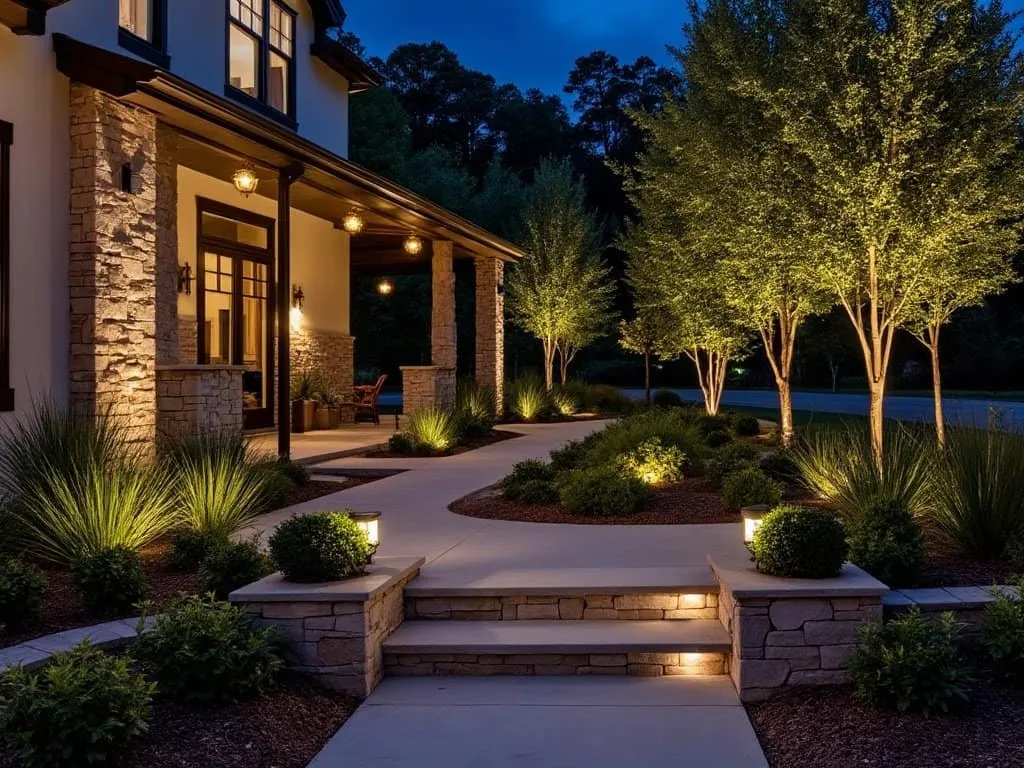
A balanced landscape lighting design uses several layers at appropriate brightness. Low-level path lighting can mark routes, while softer ambient light can make a seating area comfortable. Accent lighting adds depth when it highlights only a few selected features.
Control glare by aiming fixtures away from eye level, neighbouring properties and reflective surfaces. Choose beam angles and positions to suit the target. For trees, test how the light interacts with foliage; for walls, use a measured approach so every surface does not compete for attention.
Select fixtures for the Dubai climate
Fixtures must suit their installation location and exposure. Ask suppliers to confirm the product’s intended use, weather resistance and maintenance needs. Outdoor equipment faces dust, heat and occasional moisture, so quality and correct installation matter.
Use a consistent colour temperature and finish across the scheme unless a specific contrast supports the design. Select efficient lamps and compatible controls. A lighting professional can recommend dimming, timers or other controls that fit your daily routine.
Coordinate lighting with planting and architecture
Lighting looks most natural when the designer plans it alongside the landscape. A light placed before planting can become hidden as shrubs grow, so consider mature plant size and future access. Keep fixtures serviceable and avoid placing them where routine gardening or pool maintenance can damage them.
Connect the lighting language to the building. A modern villa may suit discreet, clean-lined fixtures, while a traditional landscape may call for a warmer, less prominent style. Use light to create a transition from indoor rooms to outdoor seating rather than treating the garden as a separate scene.
Plan safe installation and efficient control
Electrical installation around pools and outdoor areas requires appropriate expertise. Use qualified professionals, follow applicable safety standards and confirm any project-specific approvals before work begins. Keep transformers, connections and controls accessible for inspection and servicing.
A well-planned control system makes outdoor lighting easier to use. Timers, zones and dimming can prevent every fixture from running at full output all evening. Group lights by purpose so you can select the right setting for arrival, entertaining or quiet relaxation.
Create a lighting plan before installation
A lighting plan should show each fixture, its purpose, beam direction, switching zone and relationship to planting and hardscape. This makes it easier to spot dark routes, unnecessary duplication and potential glare before installation. Coordinate the plan with electrical routes, irrigation pipes and future planting so fixtures remain reachable and do not conflict with other services.
Ask to review a sample or mock-up for important effects. The appearance of a light changes with distance, surface texture and surrounding darkness. Testing a path fixture or tree uplight in place can reveal whether the beam feels comfortable and whether the chosen colour temperature suits the architecture. A small test can prevent a large scheme from producing an unwanted result.
Choose colour temperature and controls
Colour temperature affects the atmosphere of a garden. A consistent approach usually feels calmer than mixing many different tones across one view. Consider the home’s exterior materials, the colour of the planting and the way indoor lighting appears through windows. A designer can specify a coherent palette and reserve contrast for a clear design purpose.
Plan controls around real use. Separate entrance, path, feature and seating lights into sensible zones so you can select only what you need. Timers or dimmers can reduce unnecessary operation, and manual controls should remain easy to find. Confirm that the selected fixtures and drivers are compatible with the intended control system before ordering equipment.
Protect the design from glare and light spill
Bright fixtures can feel uncomfortable when people see the source directly. Use shielding, careful aiming and appropriate mounting heights to direct light toward paths or features instead of faces. Check views from garden seating, neighboring windows and inside the home. Good outdoor lighting helps people see without making the property feel harsh or overexposed.
Light spill can affect neighbors and obscure the garden’s natural darkness. Avoid illuminating every boundary and surface at the same intensity. Focus on the areas people use and a limited number of landscape details. After installation, walk the property at night and make small aiming or dimming adjustments; a final commissioning visit often improves the result substantially.
Specify robust fixtures and service access
Outdoor lighting fixtures need to suit their exact conditions, including exposure to dust, heat, moisture and physical contact. Ask the supplier for product specifications and installation guidance rather than selecting on appearance alone. The fixture’s rating and materials should match its location, and the electrical design should be reviewed by qualified professionals.
Maintenance access is part of good lighting design. Keep drivers, junctions and serviceable components accessible, and avoid burying fixtures beneath future plant growth. Use a record of fixture locations and circuit zones so replacements are straightforward. During handover, request instructions for changing lamps or components and for safely operating the controls.
Commission and refine the lighting scheme
Commissioning means checking that the installed system matches the plan and performs as intended. Test every zone, verify timer settings and confirm that fixtures point in the right direction. Look for dark spots on steps, distracting reflections on glazing and excessive brightness near seating. The installer can adjust positions and controls while the equipment is still accessible.
Lighting needs can change as trees grow or furniture moves. Schedule a later review once the garden is in regular use, and keep the original layout for reference. Clean fixtures according to supplier instructions and check for loose fittings or damaged cables. A modest maintenance routine preserves the appearance and function of the landscape lighting without requiring a redesign.
Make lighting adaptable over time
A flexible lighting scheme can respond to different activities without requiring every fixture to operate at once. For example, an arrival setting may illuminate the entrance and path, while an entertaining setting adds gentle light near dining and seating. Ask the designer to label controls clearly and demonstrate each scene. Simple, intuitive controls are more likely to be used correctly than a complicated system with unclear zones.
Plant growth and garden changes can alter the way fixtures perform. A branch may block a beam, a new screen may cast a shadow or furniture may move into a bright area. Keep the lighting plan and fixture specifications so future adjustments remain consistent. Periodically check fixture aim and clean lenses according to the manufacturer’s guidance. Avoid moving electrical components yourself unless you are qualified to do so.
Consider how the garden looks from neighboring properties and public areas as well as from your own rooms. Directing light downward and using only the brightness needed for each task can improve comfort for everyone nearby. If you add a new outdoor feature, review the existing scheme before installing more fixtures. Reusing the original zones and colour approach often creates a better result than layering unrelated lights over time.
Frequently Asked Questions
How many outdoor lights does a garden need?
There is no fixed number. A lighting designer plans by function, layout and desired effect, then selects the fewest suitable fixtures to provide useful visibility and balanced accents.
Can garden lighting be energy efficient?
Yes. Efficient fixtures, sensible brightness, timers and separate zones can reduce unnecessary use. Choose equipment suited to the installation and have controls set to match your routine.
Can I light a pool and garden together?
Yes, but pool lighting and surrounding landscape lighting need coordinated planning. Use qualified installers and confirm equipment suitability, electrical safety and applicable requirements for the specific project.
Plan your project
Discuss an outdoor lighting plan that suits your property. A site visit can identify priority routes, feature points and controls for comfortable evenings.