Fountain Installation Dubai | Custom Garden Fountains
Add a focal point with fountain installation in Dubai. Compare garden fountain styles, recirculating systems, lighting and practical maintenance planning.
Fountain Installation in Dubai: Design a Distinctive Garden Feature
A fountain can give a garden a clear focal point and a gentle sense of movement. It may suit a villa entrance, courtyard, poolside setting or landscaped commercial space. The right design complements the property and leaves enough room for people to move comfortably around it.
Fountain installation in Dubai involves more than selecting a basin or nozzle. It requires a suitable location, stable base, recirculating water system, safe electrical connections and a practical plan for cleaning and servicing.
Select a fountain that suits the setting
Fountains come in many forms, from compact courtyard bowls to contemporary jets and sculptural pieces. Choose a scale and style that work with the architecture. Consider viewing angles, nearby seating and how the fountain will sound when people use the space.
A fountain should enhance the garden rather than block circulation. Keep pathways open and make sure the feature does not conflict with underground services, irrigation or access points. A site review can help determine the best location before construction.
Plan circulation, base and drainage
Most outdoor fountains use recirculating water. The design needs a reservoir, pump, pipework and a way to manage water levels. The base must support the feature and remain stable, while the surrounding area should handle splashes and routine cleaning.
Discuss drainage and overflow before installation. Water should not collect on walkways or against building foundations. A qualified installer can assess the site and specify details appropriate to the fountain, paving and property conditions.
Choose materials and water movement
Material affects appearance, durability and cleaning. Ask how each option performs outdoors and what care it needs. A simple, accessible design may be easier to maintain than a highly detailed feature with hard-to-reach surfaces.
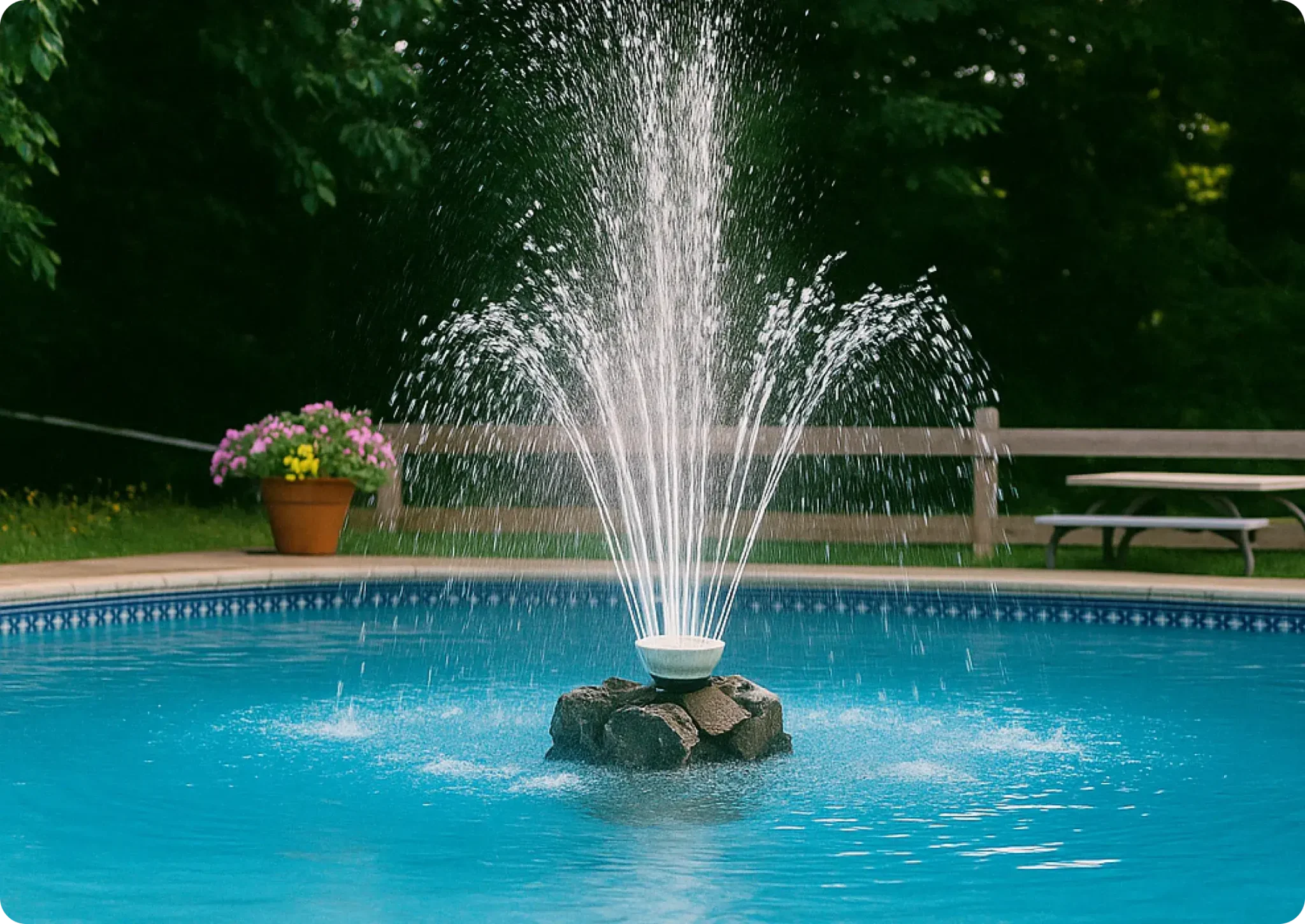
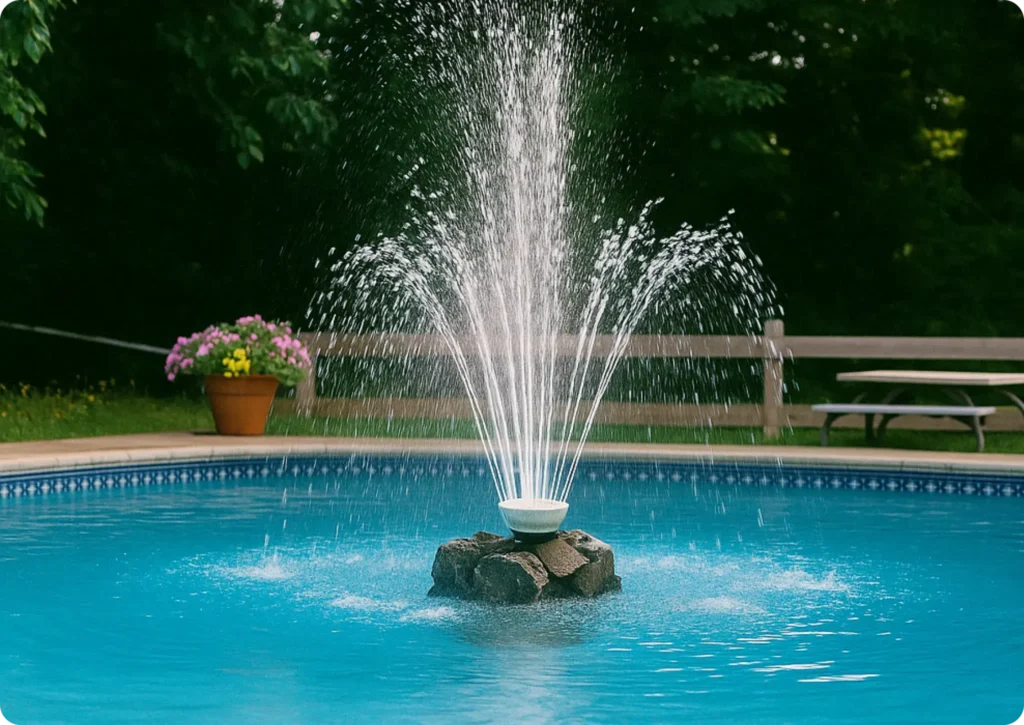
Nozzle type and pump settings control the water pattern and sound. A high jet may create more spray, while a lower flow can provide a quieter effect. Match the fountain’s movement to the space and consider wind exposure so water stays where the design intends.
Add lighting and landscape planting
Lighting can make a fountain a striking evening feature. Plan fixture placement to show the water without shining into nearby rooms or causing glare. Use equipment and installation methods suitable for wet environments, and have electrical work completed by qualified professionals.
Planting can frame the fountain and soften its base. Choose plants that suit the site and do not shed excessive debris into the water. Keep room for maintenance access and avoid planting where mature roots could affect the structure or services.
Keep maintenance simple and consistent
Routine care helps protect the pump and maintain clear water. Check water levels, remove debris and clean components according to the supplier’s instructions. If the fountain uses treatment products, follow product guidance and confirm compatibility with all system materials.
Ask a fountain installation company in Dubai for equipment specifications, warranty information, commissioning steps and a maintenance schedule. Confirm the full scope, including the base, electrical connection, water supply and any required approvals for your property.
Compare fountain types and placement
A self-contained fountain may suit a compact courtyard, while a larger built-in feature can anchor an entrance or garden axis. Consider whether the feature should be a quiet accent, a formal centrepiece or a more modern sculptural element. The design should reflect the scale of the property and leave room for planting, seating and comfortable movement.
Placement influences both appearance and everyday care. Keep the fountain visible from a useful viewpoint, but avoid locating it where splashes can reach a doorway or frequently used walkway. Check the position against underground services, irrigation and drainage. A measured site plan helps confirm clearances before the base or water connection is installed.
Understand pumps, reservoirs and water quality
The pump must suit the fountain’s height, nozzle and desired flow. An undersized unit may not produce the intended effect, while excessive flow can cause splash and noise. Ask the installer to explain the selected equipment and how the reservoir maintains water supply. A simple, accessible setup is often easier to service than a complicated system hidden behind finishes.
Water quality depends on exposure, circulation and care. Leaves, dust and debris can collect in a basin, so plan for access to clean it. Ask which treatment, if any, is suitable for the system materials and whether the fountain shares water with a pool. Follow supplier guidance and avoid adding products without confirming compatibility.
Make a small courtyard fountain feel intentional
In a compact courtyard, a fountain can create a focal point without consuming the entire floor area. Choose dimensions that leave an open route and consider a wall-mounted or narrow profile if floor space is limited. The background finish, nearby planting and seating should frame the feature rather than compete with it.
The sound level matters in a small enclosed space. Test or discuss flow settings so the fountain adds atmosphere without overwhelming conversation or carrying noise into adjacent rooms. Keep a practical route to the pump and basin, and make sure cleaning tools can reach the water. These details help a small feature remain enjoyable rather than cumbersome.
Coordinate installation with other trades
Fountain work may involve a landscaper, plumber, electrician, stone installer and sometimes a pool contractor. Identify who is responsible for the base, water feed, drainage, wiring and final commissioning. Shared drawings and a simple sequence reduce the risk of one trade covering a connection another still needs to inspect.
Confirm how construction will protect nearby paving, planting and finished walls. Ask when the fountain can be filled and tested, and who will be present during commissioning. Do not operate new equipment before the installer confirms the system is ready. A coordinated handover gives you confidence that the feature has been checked under normal operating conditions.
Use lighting and sound with restraint
Lighting can add depth to a fountain at night, but it should support the water rather than compete with it. Position fixtures to reveal the movement and material while avoiding direct glare into nearby windows or seating. Use a consistent colour tone with the rest of the garden, and confirm the fixtures are appropriate for the wet environment.
Sound and lighting should suit the way the property is used. A quiet residence may benefit from a gentle flow and subtle illumination, while a larger entry court may support a more prominent display. Include controls that let you turn the fountain and its lights off independently. That flexibility supports different occasions and can simplify maintenance.
Choose a location that stays practical
The most prominent position is not always the best place for a fountain. Consider how close it sits to seating, doors, walkways and nearby windows, and whether splash could affect those areas. A feature should be visible enough to enjoy while leaving room for people to pass and for maintenance work. Use a simple site sketch to compare candidate locations before committing to a base or water connection.
Check the setting at different times of day. Sunlight can create reflections on water, while evening lighting changes how the basin and surrounding materials appear. Nearby planting may look sparse at installation but grow into the view later. The designer should account for mature plant size and keep the fountain’s pump and service points accessible even after the landscape fills in.
If the fountain is part of an entrance or shared space, consider how visitors will approach it and how staff will clean around it. Choose a finish that suits the expected level of use and can be maintained with available supplies. A carefully located feature can make a strong impression without becoming an obstacle or a demanding maintenance task.
Frequently Asked Questions
Do garden fountains recycle water?
Many fountains recirculate water through a pump and reservoir. Evaporation and splash still cause water loss, so the system may need periodic top-ups.
Can I install a fountain in a small courtyard?
Yes. Compact designs can suit small spaces when the feature leaves enough room for access and movement. A site assessment helps confirm scale and placement.
How often should a fountain be cleaned?
The schedule depends on the system, exposure and debris. Follow the manufacturer and installer instructions, and check water levels and pump performance regularly.
Plan your project
Choose a fountain that suits the scale and style of your property. Arrange a consultation to plan placement, water movement, lighting and maintenance.